In a small compound in southwestern Nigeria, the sound always came before the aroma.
Gbam! Gbam! Gbam!
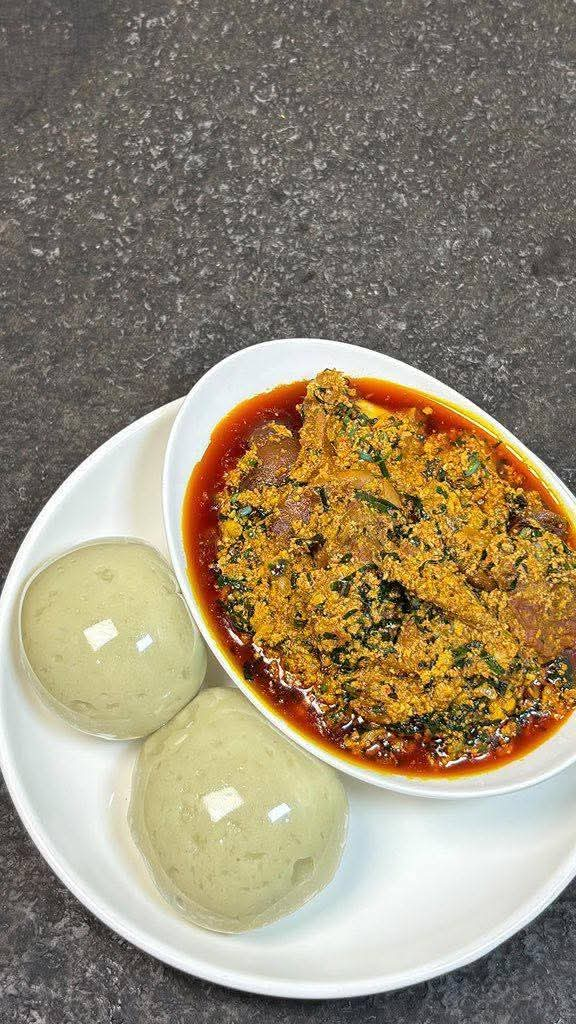
The rhythmic pounding echoed like a drumbeat calling the family together. Inside the mortar, boiled yam transformed under the steady rise and fall of the pestle. What started as ordinary white tubers became something smooth, stretchy, and almost magical Pounded Yam, the pride of many Nigerian homes.
🌾 Its Beautiful Features
Pounded yam is soft, silky, and snow-white.
It stretches like silk when lifted.
It molds perfectly in your palm round, smooth, flawless.
Served hot, it sits confidently beside rich soups like egusi, ogbono, or vegetable soup, ready to carry flavor with dignity. It doesn’t shout; it supports. It doesn’t overpower; it complements.
And that, right there, is African culture.
💪 Its Health Benefits
Yam is not just food, it is strength.
Rich in carbohydrates, it provides long-lasting energy.
Packed with fiber, it supports digestion.
Contains important vitamins like Vitamin C and B6.
A good source of potassium for heart health.
For generations, farmers, traders, students, and kings have eaten pounded yam and faced the day with power. It fuels hard work and long celebrations alike.
🪘 More Than a Meal
In many Nigerian communities, pounding yam is not a one-person job. It is teamwork. One person pounds, another turns. It requires rhythm, coordination, and trust.
Just like African society.
Our culture thrives on unity on community effort. From festivals to weddings, from naming ceremonies to Sunday lunches, pounded yam appears not just as food, but as a symbol of togetherness.
When elders sit in a circle and dip into one bowl, it is not just eating. It is sharing life. No cutlery. No barriers. Just connection.
🌍 The Beauty of African Culture
Africa teaches us that food is memory.
Food is identity.
Food is heritage.
Pounded yam reminds us that beauty doesn’t need to be loud. It can be soft yet strong. Simple yet powerful.
Just like Africa rich soil, strong people, deep traditions, and rhythms that never fade.
So the next time you see that steaming mound of white goodness beside a bowl of soup, remember:
You are not just eating.
You are tasting history.
You are holding culture in your hands.
And that is beautiful. 🌍✨