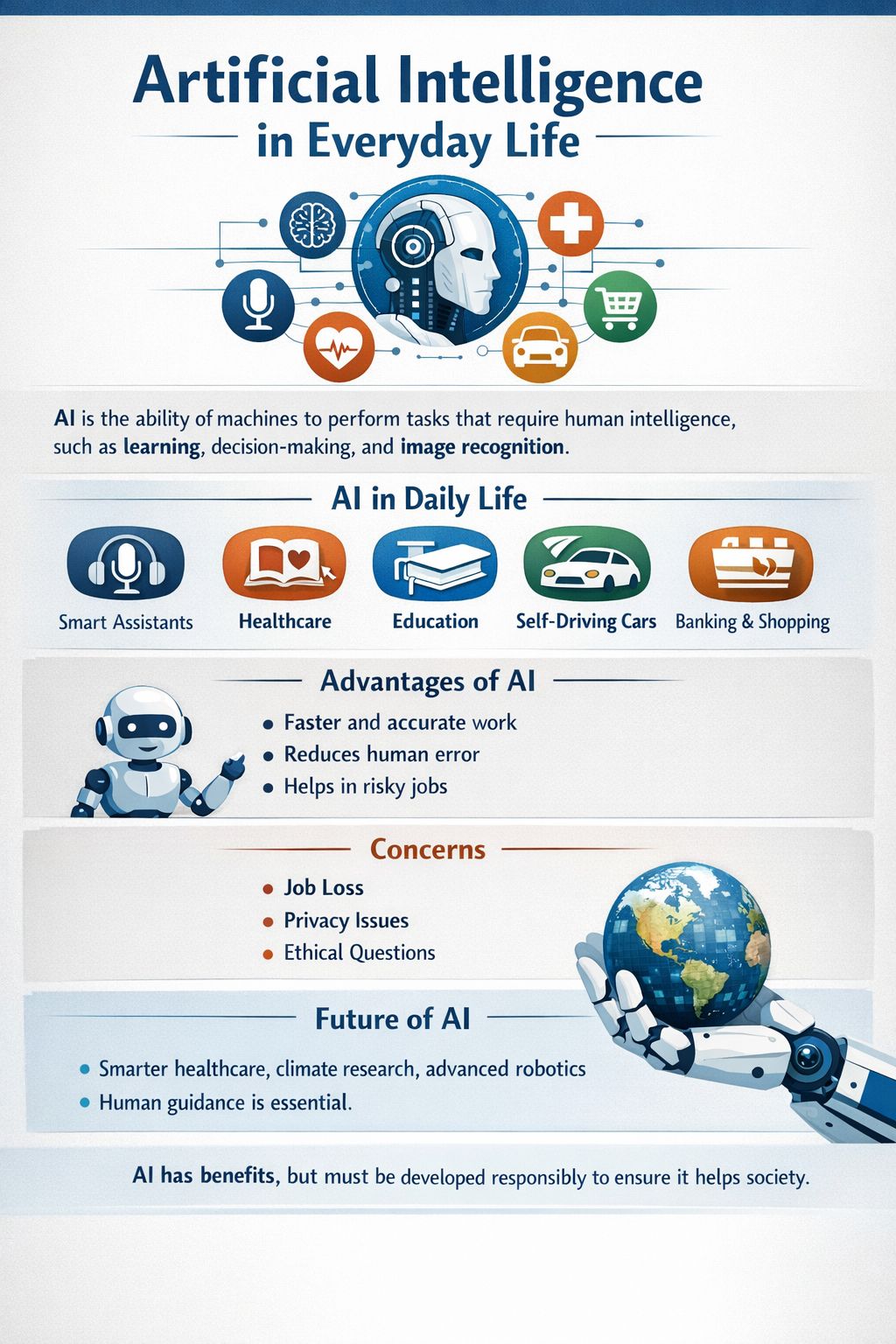
Artificial Intelligence (AI) has become one of the most influential technologies of the modern world. It is used in areas such as healthcare, education, transportation, security, and business. While AI offers many benefits and opportunities for development, it also raises serious concerns about sustainability. Sustainable AI refers to the development and use of artificial intelligence in ways that minimize harm to the environment and society, while maximizing long-term benefits. However, achieving this balance involves important environmental and societal trade-offs.
From an environmental perspective, AI systems require a large amount of energy to function. Training complex AI models depends heavily on powerful data centers that consume electricity and generate heat. These data centers often rely on non-renewable energy sources, which contribute to carbon emissions and climate change. As AI continues to grow, so does its energy demand. On the other hand, AI can also be used to support environmental sustainability. For example, AI helps in climate modeling, renewable energy management, smart agriculture, and reducing waste in industries. The trade-off here is clear: while AI can worsen environmental problems through high energy consumption, it can also be part of the solution if developed and managed responsibly.
Societal trade-offs are equally significant. One major concern is job displacement. AI-powered machines and software can perform tasks that were once done by humans, especially in manufacturing, customer service, and data processing. This can lead to unemployment and increased inequality, particularly in developing countries where alternative job opportunities may be limited. However, AI also creates new jobs and industries, such as data analysis, AI maintenance, and software development. The challenge is ensuring that people are equipped with the right skills to adapt to these changes.
Another societal issue is bias and fairness. AI systems learn from data, and if the data contains biases, the AI may reinforce discrimination in areas like hiring, policing, and lending. This can negatively affect marginalized groups. At the same time, AI has the potential to improve decision-making and reduce human errors if properly designed. The trade-off lies in how carefully AI systems are trained, monitored, and regulated.
Privacy and data security also raise concerns. AI relies heavily on large amounts of personal data, which can be misused or exposed if not properly protected. While AI can improve security and efficiency, it can also threaten individual privacy if ethical guidelines are ignored.
In conclusion, sustainable AI is not about rejecting technology, but about using it wisely. The environmental and societal trade-offs show that AI development must be guided by strong policies, ethical standards, and public awareness. By investing in renewable energy, inclusive education, and responsible governance, society can enjoy the benefits of AI while reducing its negative impacts. Sustainable AI is essential for ensuring that technological progress does not come at the expense of the planet or humanity.
By Oreoluwa Feyisara Okulaja