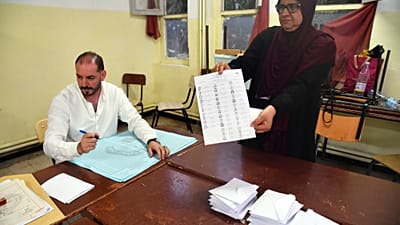
Algerian authorities are tallying ballots from a parliamentary election overshadowed by widespread voter apathy, economic frustration and anger over the exclusion of hundreds of would-be candidates.
Roughly 25 million eligible voters were called to choose 407 members of the National People’s Assembly from more than a thousand contenders. Yet polling stations in many cities remained sparsely attended for much of the day, reflecting a deepening disconnect between citizens and political institutions.
The National Independent Elections Authority reported a provisional turnout of about 20 percent, a figure that, if confirmed, would mark the lowest participation rate in a legislative race since independence. It would fall even below the already record-low 23 percent registered in the previous parliamentary vote.
“These figures are provisional. It is certain that they will change,” said Karim Khelfane, interim head of the election authority, as officials sought to project calm while counting continued. Earlier in the day, state television cited the body as saying turnout had reached 11 percent nationwide by mid-afternoon, and close to 10 percent among Algerians voting abroad.
At a polling station in Algiers, 74-year-old retiree Djammel Bouakkaz described his vote as a duty rather than an expression of enthusiasm. “We came to fulfil our duty, hoping for something good. That’s all I have to say,” he told reporters, before quietly leaving the schoolyard where ballot boxes stood largely unattended.
The campaign was dominated less by policy debate than by controversy over who was allowed to run. Authorities barred roughly a third of prospective candidates, according to political activists and local media, with some prominent figures prevented from standing in key constituencies, including the capital. Officials have not fully explained the criteria used, fuelling accusations of political vetting designed to sideline critical voices.
Despite the discontent, the ruling National Liberation Front and its allies were widely expected to maintain their grip on the assembly, whose members serve five-year terms. Interior Minister Said Sayoud repeatedly urged citizens to vote, framing participation as a patriotic act, but declined to comment publicly on the low turnout as polls closed.
The muted response at the ballot box follows years of turbulence. The Hirak protest movement, which erupted in 2019, forced the resignation of long-time president Abdelaziz Bouteflika and raised hopes of sweeping reform. Many of those who marched then now say little has changed, pointing to persistent restrictions on dissent and a cost-of-living crisis that has eroded purchasing power.
Local daily L’Expression summed up the central challenge of the campaign: convincing Algerians that voting still matters. The preliminary figures suggest that, for many, that effort fell short.