Being African today, especially Nigerian, means growing up inside contradiction.
It means carrying deep pride and deep frustration at the same time.
Many Nigerians were raised by parents who survived difficult realities themselves. Parents who believed discipline was protection. Parents who measured love through sacrifice more than emotional expression.
For many African homes, parenting was built around survival first.
“Read your books.” “Respect elders.” “Don’t disgrace this family.” “Life is not easy.”
Those words shaped entire generations.
Our parents wanted stability for us because instability was something they knew too well personally. Many of them grew up during economic hardship, political uncertainty, or environments where opportunities were limited. So naturally, they raised children to prioritize security over self-discovery.
But today’s generation is growing up in a different world entirely.
A Nigerian child today is influenced by both African culture and global internet culture simultaneously. One moment they are hearing traditional expectations at home, the next moment they are online seeing completely different conversations about freedom, parenting, mental health, career choices, and identity.
That gap creates tension inside many families.
Older generations often see younger people as disrespectful or “too exposed.” Younger people sometimes see older generations as emotionally unavailable or too controlling.
But the truth is more complicated.
Many African parents were never taught emotional communication themselves. They provided through sacrifice because survival demanded it. Love was often practical instead of verbal.
And many young Nigerians today are trying to break cycles while still respecting culture.
That balancing act is difficult.
Because despite modernization, family expectations remain powerful in African societies. Career choices, marriage, financial responsibility, religion, and even lifestyle decisions are often connected to collective family identity rather than just individual preference.
At the same time, modern Nigerian youth are becoming more vocal about mental health, gentle parenting, emotional intelligence, boundaries, and personal fulfillment.
That shift matters.
Not because tradition is useless, but because every generation adapts differently to the realities it faces.
Being Nigerian today means learning resilience early. It means finding humor inside hardship. It means surviving systems that are often exhausting while still dreaming loudly.
It also means understanding that parenting is evolving.
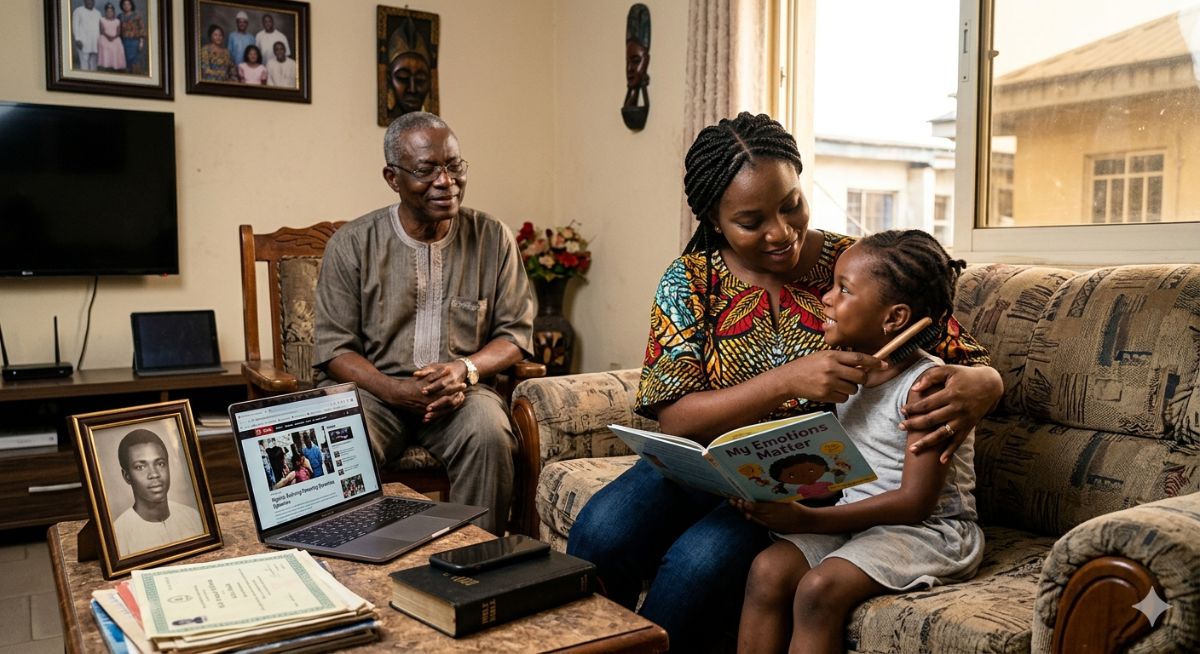
Many young Africans now want to raise children with both discipline and emotional safety. Respect without fear. Guidance without intimidation. Culture without silence.
And honestly, that may become one of the biggest transformations happening quietly across African families today.