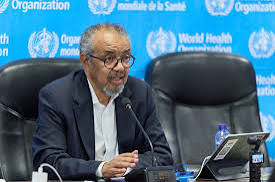
The head of the World Health Organization, Dr Tedros Adhanom Ghebreyesus, has warned that the Ebola outbreak in the Democratic Republic of Congo remains a global health emergency and is “far from being under control.”
Speaking after a meeting of the WHO’s emergency committee, Dr Tedros said the epidemic continues to pose a high risk of spreading to neighbouring countries, despite months of intensive response efforts. The outbreak, centred in the country’s north and east, has become the deadliest in the DRC’s history, with almost 5,000 infections and more than 2,300 deaths recorded.
Health officials say the virus is spreading faster than in previous outbreaks, driven by insecurity, weak state presence and deep mistrust of authorities. Large parts of Ituri and other affected provinces are controlled or contested by armed groups, making it dangerous for medical teams to reach patients, trace contacts or safely bury the dead.
Dieudonne Mwamba, Director General of the DRC’s National Public Health Institute, said recent weeks have brought a worrying rise in both cases and fatalities. He attributed this in part to “unsafe areas where our teams have struggled to carry out activities and gain access,” as well as persistent misinformation that fuels resistance to treatment centres and vaccination campaigns.
The virus has now spread across six provinces in the north and east, where health infrastructure is sparse and many communities rely on traditional healers. Mwamba stressed the need to combine national and international efforts to contain the epidemic where it is currently active, “starting with the epicentre, which is still Ituri Province, while preventing the other high-risk provinces from being affected.”
Ebola is transmitted through direct contact with the bodily fluids of infected people and causes a severe haemorrhagic fever. The current surge has been linked to the Bundibugyo strain of the virus, for which no fully approved, specific vaccine or treatment yet exists, although several clinical trials are under way.
Dr Tedros appealed for greater international support and cooperation, saying new recommendations will be issued to the DRC and countries at risk. What troubles him most, he said, is “where people are dying – at home, in their communities, outside treatment centres, and outside known contact lists.”
“Every death like that points to a chain of transmission we have not yet found,” he warned. “Until every chain is found and broken, the epidemic will continue.”