One of the increasingly noticeable trends in today’s digital society is how quickly serious events are repackaged into entertainment on social media. Platforms such as TikTok, Instagram Reels, Facebook Reels, and, at times, X have empowered people to create and share content freely but that freedom also comes with a responsibility to act with empathy, sensitivity, and respect. While these platforms serve different purposes, they all have the potential to spread information responsibly or to trivialize serious events when tragedy is turned into viral content.
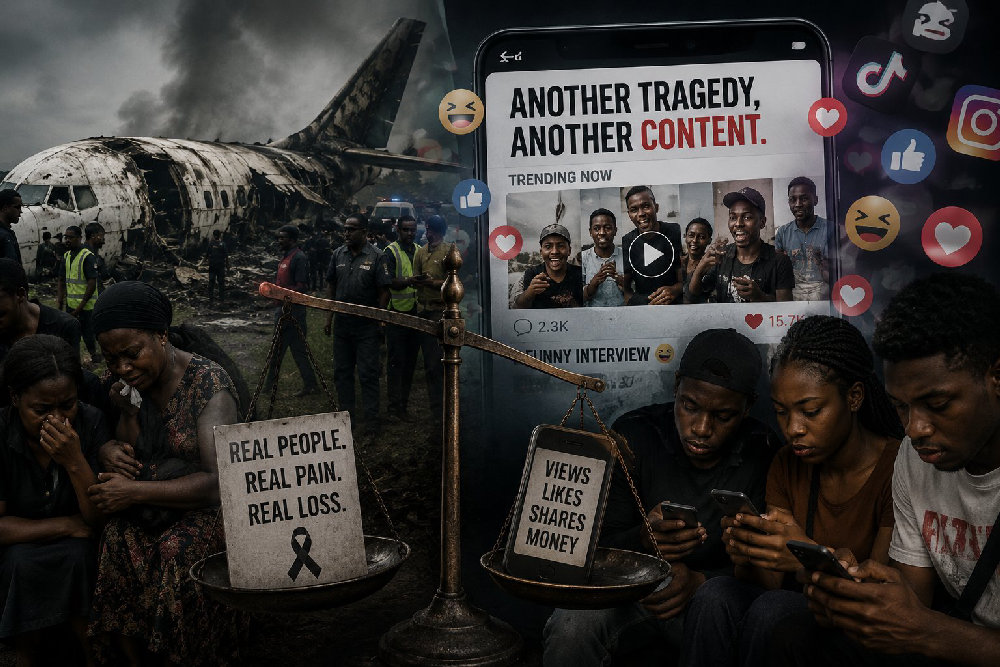
Unfortunately, whenever significant or distressing events occur, ranging from accidents, violent incidents, and natural disasters to broader social and economic crises, online content often emerges within hours that reframes these situations for humor or virality. Clips, interviews, and emotional moments are frequently turned into memes, comedy skits, lip-sync videos, or trending sounds.
In some cases, even everyday struggles faced by Nigerians, such as economic hardship, fuel scarcity, inflation, unemployment, or power supply challenges—are repurposed into jokes or viral content by influencers and users seeking engagement.
While content creation is a legitimate form of expression and even livelihood for many, there is a growing concern that the pursuit of views, likes, and monetization sometimes overshadows basic human sensitivity.
Real people are often behind these experiences, and many are navigating difficult circumstances that deserve understanding rather than ridicule.Consider how it feels for individuals or communities already dealing with hardship to see their experiences turned into jokes, challenges, or viral trends.
What may appear as harmless entertainment to some can, in reality, trivialize genuine struggles and deepen the emotional burden of those affected.
This pattern reflects a broader cultural issue: the gradual erosion of boundaries between entertainment and empathy. Not every trending moment is suitable for humor, and not every public expression of frustration, pain, or struggle should be converted into content for engagement.
Social media, however, still holds immense potential for positive impact. It can be used to educate, raise awareness, mobilize support, and foster solidarity during difficult times.
Instead of exploiting sensitive situations, creators and influencers can leverage their platforms to highlight solutions, share accurate information, and promote constructive conversations around societal challenges.
Ultimately, a society is not only defined by how it celebrates success, but also by how it responds to hardship and collective struggle. Preserving empathy in digital spaces is essential if we are to maintain the humanity that connects us all.
1