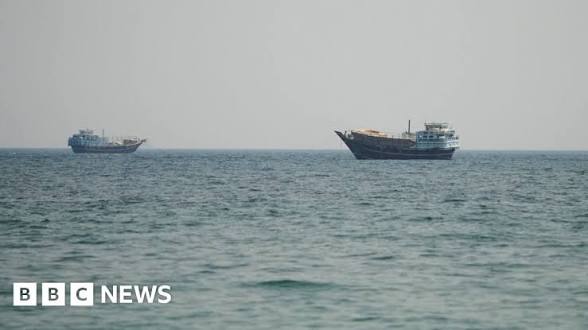
Tensions between the United States and Iran are intensifying over control and security of the Strait of Hormuz, a narrow waterway that carries a significant share of the world’s seaborne oil and gas. The latest flare-up follows a weekend of military exchanges that has renewed fears of a broader regional confrontation.
According to U.S. officials, the current crisis began when a commercial container ship was struck near the coast of Oman in what Washington says was an Iranian attack. In response, U.S. forces launched a series of strikes on targets they identified as linked to Iran’s military infrastructure, including air defense systems, radar installations, missile platforms and fast attack boats believed to operate in and around the strait.
U.S. Central Command has emphasized that the Strait of Hormuz is an international waterway essential to global trade and energy security. American officials insist that no single country, including Iran, has the right to control or close the passage, and they frame their operations as necessary to protect commercial shipping and deter further attacks.
Iran’s Revolutionary Guard has issued a sharply different message, asserting that the strait lies within Iran’s sphere of authority and warning that it will not tolerate what it calls illegal U.S. interference. Iranian commanders have portrayed the American presence as a direct threat to national sovereignty and regional stability, vowing to respond to any perceived violations.
The confrontation is unfolding against the backdrop of a fragile 60-day interim arrangement that was meant to create space for broader diplomatic talks. Instead, negotiations have largely stalled, overshadowed by military incidents at sea and in the air, and by increasingly heated rhetoric from both capitals.
Regional states are bracing for potential escalation. Missile alert sirens sounded in Bahrain, home to the U.S. Navy’s Fifth Fleet, while Kuwait activated elements of its air defense network amid concerns that Iranian retaliation could target U.S. assets or allied infrastructure. Reports of explosions in several parts of Iran following the U.S. strikes have further fueled uncertainty.
Analysts warn that any sustained disruption in the Strait of Hormuz could send shockwaves through global energy markets, drive up shipping and insurance costs, and deepen insecurity across the Gulf. With both Washington and Tehran publicly hardening their positions, diplomats fear that miscalculation in one of the world’s most sensitive maritime chokepoints could quickly spiral beyond the control of either side.