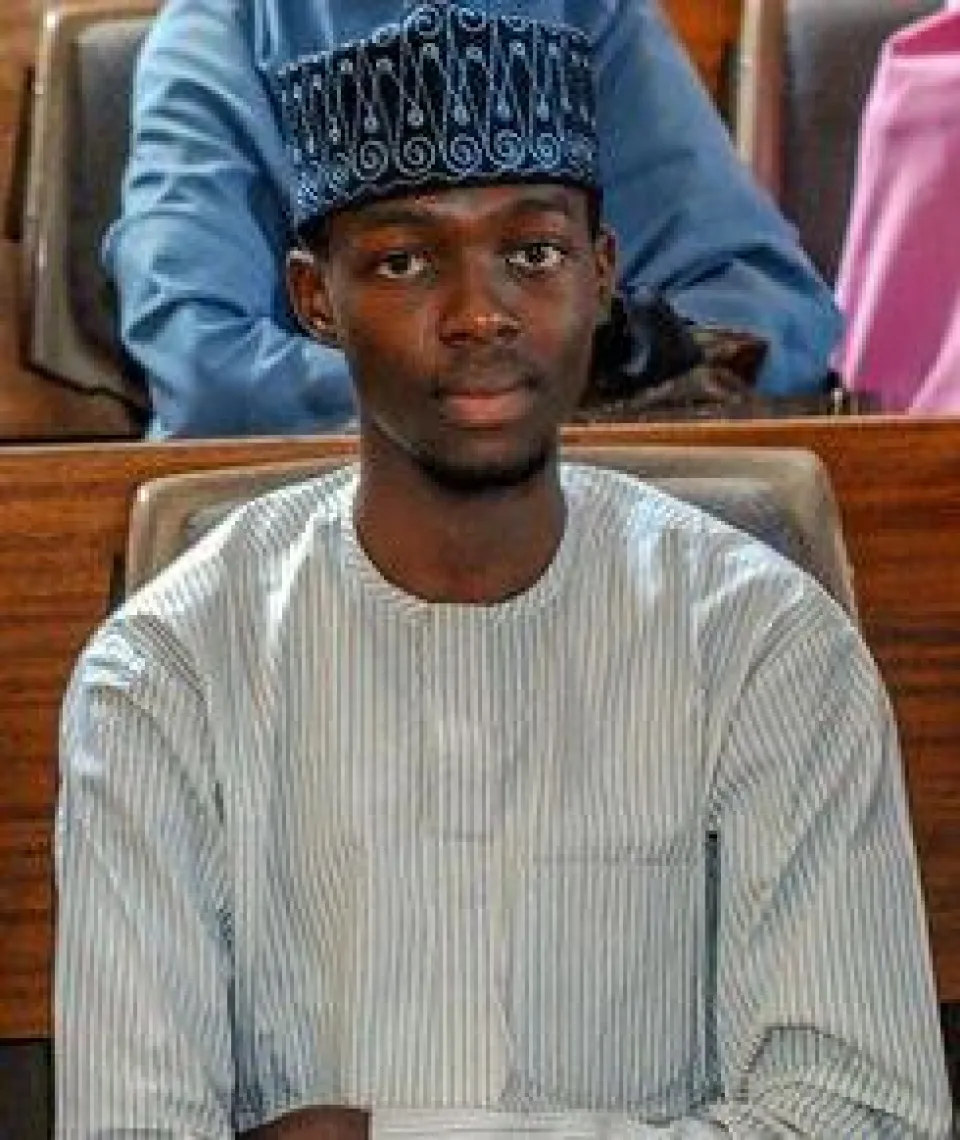
By Ahmed Jubril Adekunle
The sun beat down on the Faculty of Communication and Media Studies, University of Abuja, last Tuesday, but the heat did little to dampen the spirits of a determined group of students. Armed with shovels, watering cans, and a shared sense of purpose, they sank their hands into the earth — not just to plant trees, but to sow a powerful message of environmental stewardship.
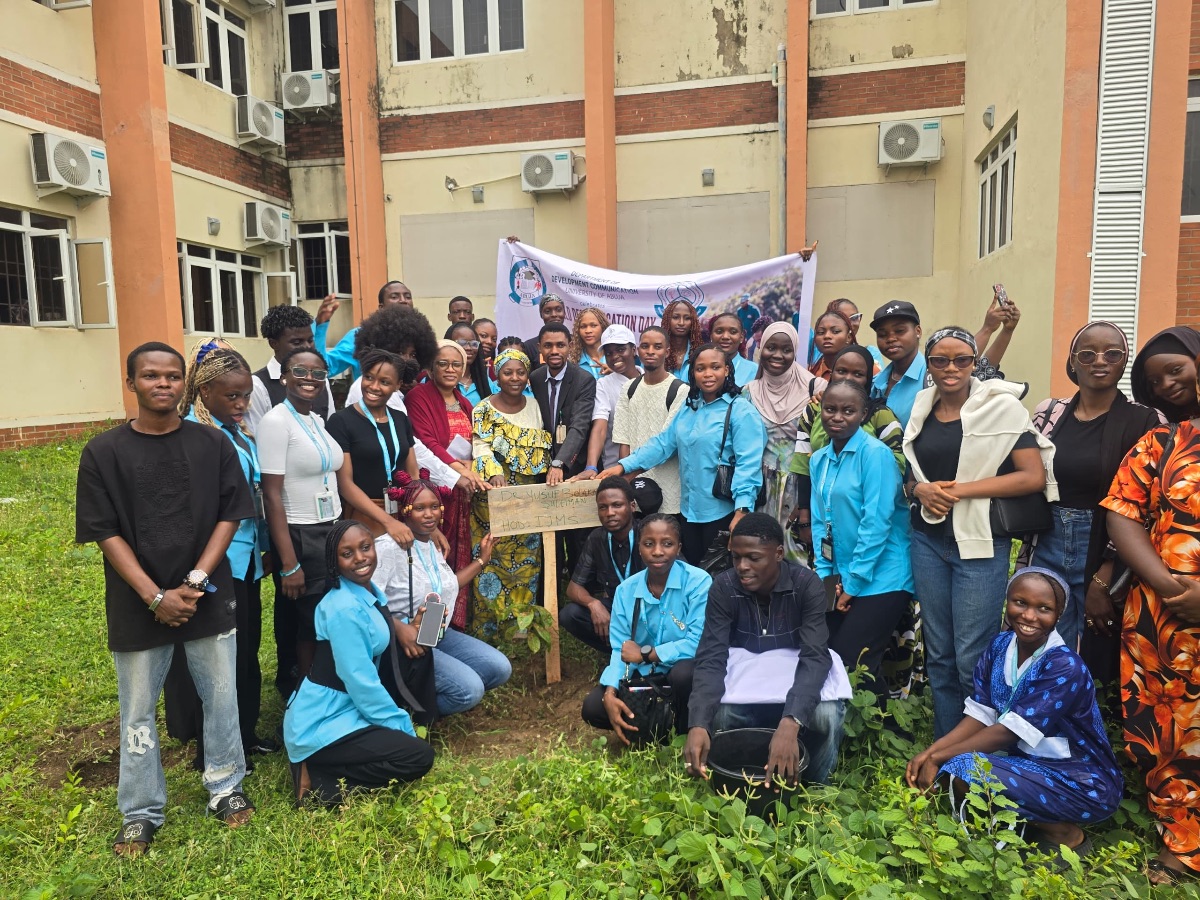
In a vivid demonstration that education must leap beyond the four walls of a classroom, students of the Department of Development and Strategic Communication, led by their lecturer Dr. Jamila Dahiru, took center stage in a tree-planting exercise marking the global campaign against desertification and drought. Ten trees now stand as silent, living sentinels across the faculty premises — a lasting legacy of practical learning and collective responsibility.
Bridging Theory and Action
The exercise was the brainchild of the Environmental Communication class (DCS 208), a course designed to explore the intersection of media, messaging, and environmental sustainability. But Dr. Jamila Dahiru made one thing clear: environmental communication is hollow without action.
“Awareness campaigns are vital, but they are not enough,” Dr. Dahiru declared as she addressed students and staff gathered under the morning sky. “Tree planting remains one of the most effective, tangible strategies we have to combat desertification, purify our air, restore biodiversity, and build climate resilience. Today, we are not just talking about environmental challenges — we are physically fighting them.”
Her words struck a chord. What unfolded over the next few hours was a masterclass in hands-on environmentalism, transforming students into frontline actors in Nigeria’s battle against creeping desertification and land degradation.
A Faculty United for the Planet
The event drew an inspiring cast of academic leaders who came ready to dig in — literally. Among them were Dr. Sarah Gambo, Head of the Department of Broadcasting and Film Studies; Dr. Yusuf Bolakale Suleiman, Head of the Department of Information, Journalism and Media Studies; and celebrated author Mrs. Funmilayo Braithwaite. In a touching gesture, a tree was also planted in honor of Dr. Aisha Abdulrauf, Head of the Department of Development and Strategic Communication, whose unavoidable absence could not erase her symbolic presence.
One after the other, they took up tools, lowered seedlings into prepared pits, and gently packed the soil. It was a powerful image: lecturers and learners, side by side, united by a cause far bigger than any single department.
More Than Just Digging Holes
For the students of DCS 208, this was no passive field trip. Every participant — myself included — was fully immersed in the process. We dug deep pits to give roots room to spread, carefully placed each seedling, watered the thirsty earth, and documented every moment through lenses and notebooks. The air buzzed with laughter, dirt-stained hands, and the quiet satisfaction of creating something enduring.
As a capstone to the day’s work, the entire class planted one tree in its collective name — a living monument to the cohort’s commitment. That tree, standing shoulder to shoulder with those planted by faculty, declares a simple truth: environmental responsibility is a shared inheritance, and youth are ready to claim it.
A Symbol That Will Outgrow Us All
The ten newly planted trees now punctuate the faculty landscape, still slender but brimming with promise. They are more than ornamental additions. Each one is a quiet, growing statement against the encroaching threat of desertification that haunts vast stretches of Nigeria and the world. They will filter the air, cool the ground, shelter birds, and — decades from now — remind future students that a small group of communicators chose to act.
This initiative underscores a crucial reality: educational institutions are not just factories of degrees; they are living laboratories where solutions to society’s gravest challenges can take root. When a university lecture on environmental communication transforms into the rhythmic thud of a shovel breaking ground, the lesson becomes unforgettable.
The Time for Youth-Led Conservation is Now!
As the climate crisis intensifies and arable land shrinks, the role of young people in conservation has never been more urgent. What happened at the Faculty of Communication and Media Studies is a blueprint: academia equipping students with both knowledge and the moral imperative to act. We did not simply learn about desertification that Tuesday — we pushed back against it, one tree at a time.
The campaign against desertification and drought deserves more than speeches. It deserves seeds in the ground, calloused hands, and the stubborn hope that a single tree can spark a forest. On our faculty grounds, that hope has already begun to leaf.
Ahmed Jubril Adekunle is a Development Communication student at the University of Abuja and a participant in the DCS 208 tree-planting initiative.