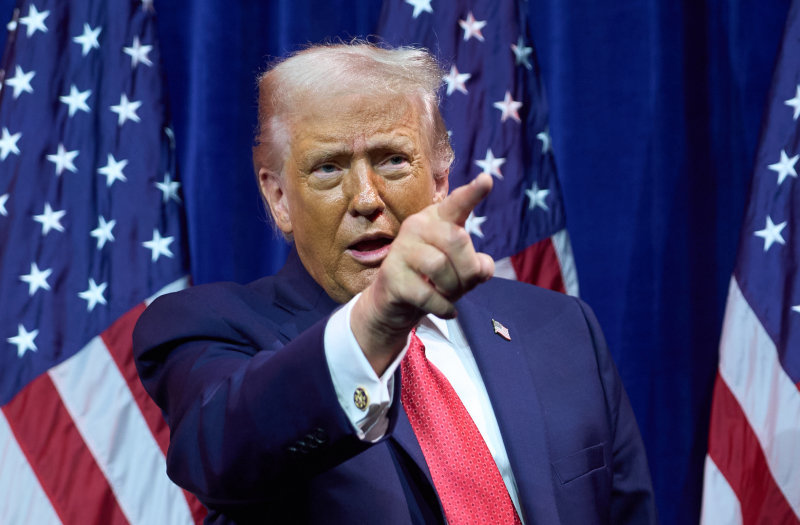
The United States has launched one of the most sweeping retrenchments from multilateral institutions in its modern history, formally withdrawing from 66 international organisations under orders from President Donald Trump.
The move, detailed in a presidential memorandum and framed as a corrective to “wasteful, ineffective, and harmful” global bodies, targets 35 non-UN entities and 31 organisations linked to the United Nations system. Among them is the UN Framework Convention on Climate Change (UNFCCC), the foundational global climate treaty that underpins the 2015 Paris Agreement.
The White House argues that the affected organisations “no longer serve American interests” and have become vehicles for “ineffective or hostile agendas.” The decision effectively severs US funding and participation from a wide array of institutions that have, for decades, shaped global policy on climate, trade, development, and human rights.
US Secretary of State Marco Rubio, announcing the withdrawals, said they followed a comprehensive review ordered by Trump under Executive Order 14199. That directive instructed US agencies to catalogue international organisations receiving American support and assess whether they advanced or undermined US priorities.
“These withdrawals will end American taxpayer funding and involvement in entities that advance globalist agendas over US priorities,” Rubio said. “Many of these organisations promoted radical climate policies, global governance, and ideological programs that conflict with US sovereignty and economic strength.”
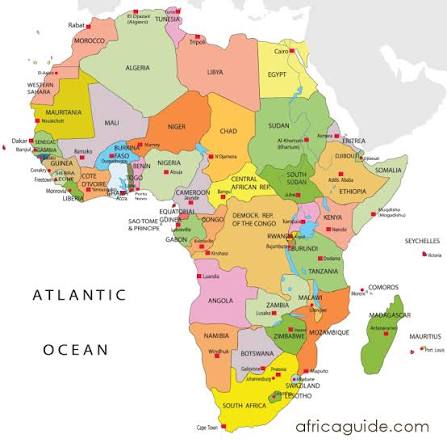
The list of targeted bodies is eclectic, spanning technical agencies, development compacts, and cultural networks. Among those named are the 24/7 Carbon-Free Energy Compact, the Colombo Plan Council, the Commission for Environmental Cooperation, the International Development Law Organisation, the International Federation of Arts Councils and Culture Agencies, the UN Economic and Social Council’s Economic Commission for Africa, the International Trade Centre, the UN Human Settlements Programme (UN-Habitat), and the Office of the Special Adviser on Africa.
According to the administration’s statement, these and other institutions were deemed redundant, mismanaged, or “captured by interests advancing agendas contrary to those of the United States.” The review concluded that Washington was pouring billions of dollars into structures that, in the administration’s view, delivered little tangible benefit to American citizens.
“The Trump Administration is clear: It is no longer acceptable to be sending these institutions the blood, sweat, and treasure of the American people, with little to nothing to show for it,” Rubio said. “The days of billions of dollars in taxpayer money flowing to foreign interests at the expense of our people are over.”
At the heart of the administration’s argument is a broader ideological critique of the post-World War II international system. Rubio cast the network of global institutions as having drifted far from its original mission of preventing conflict and facilitating pragmatic cooperation among sovereign states.
“What started as a pragmatic framework of international organisations for peace and cooperation has morphed into a sprawling architecture of global governance, often dominated by progressive ideology and detached from national interests,” he said. “From DEI mandates to ‘gender equity’ campaigns to climate orthodoxy, many international organisations now serve a globalist project.”
That language reflects a long-standing current in Trump’s political rhetoric: suspicion of multilateralism, hostility to climate initiatives seen as constraining US industry, and opposition to what his allies describe as “woke” or “ideological” agendas embedded in international norms. The withdrawals are being presented domestically as a reassertion of sovereignty and a rebalancing of foreign commitments toward narrowly defined national interests.
Rubio stressed that Washington would not seek to dismantle all forms of cooperation, but would sharply narrow the scope of its engagement.
“We will not continue expending resources, diplomatic capital, and the legitimising weight of our participation in institutions that are irrelevant to or in conflict with our interests,” he said. “We reject inertia and ideology in favour of prudence and purpose. We seek cooperation where it serves our people and will stand firm where it does not.”
The decision to withdraw from the UNFCCC is particularly consequential. While the Trump administration had already distanced itself from the Paris Agreement, leaving the parent treaty amounts to a deeper rupture with the global climate regime. The UNFCCC provides the legal and institutional framework for international climate negotiations, reporting, and verification. US absence from that framework raises questions about the future of global climate diplomacy and the ability of other major emitters to maintain momentum without Washington’s formal participation.
Similarly, the exit from development and trade-related bodies such as the International Trade Centre and regional economic commissions signals a retreat from forums where the US has traditionally wielded significant influence over global economic rules. Critics warn that such withdrawals could create vacuums that rival powers, particularly China, may move quickly to fill.
Supporters of the move, however, argue that many of these institutions had already become platforms for anti-American sentiment or for regulatory agendas that disadvantaged US companies. They contend that by stepping back, Washington can redirect resources into bilateral partnerships and domestic priorities, while using its economic and military weight to shape outcomes outside formal multilateral channels.