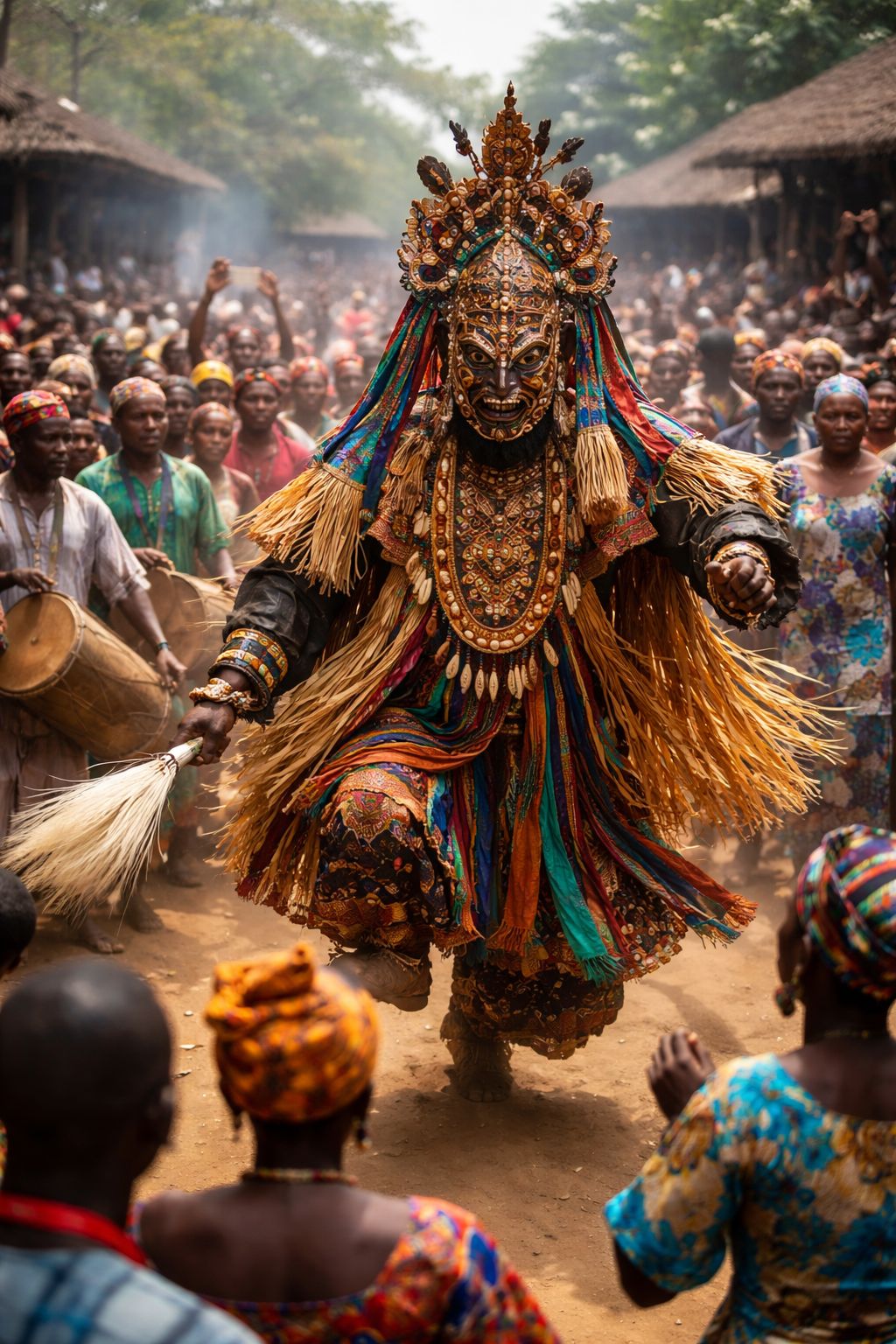
Across many communities in Nigeria, the appearance of masquerades is more than spectacle, it is a sacred cultural experience. Among groups like the Igbo people, masquerade festivals (often called Mmanwu) represent ancestral spirits returning to interact with the living.
During festivals, the air becomes charged with anticipation. Drums beat loudly, flutes echo, and suddenly, masked figures emerge covered in elaborate costumes made of fabric, raffia, and carved wood.
Each masquerade has a unique identity, movement, and role. Some entertain with acrobatic dances, while others command silence and respect, believed to carry messages from the ancestors.
The preparation is as significant as the performance. Only initiated members of secret societies are allowed to embody these spirits, and the process involves rituals, discipline, and deep cultural knowledge. To the uninitiated, especially women and children in certain traditions, the masquerade is not just a man in costume, it is a spirit, deserving reverence.
Masquerade festivals serve multiple purposes: they enforce social norms, settle disputes, celebrate harvests, and mark important community events. They also strengthen unity, as entire villages gather to witness and participate in the tradition.
In today’s modern Nigeria, these festivals continue to thrive, blending ancient beliefs with contemporary celebration. Despite changing times, the masquerade remains a powerful symbol of identity, spirituality, and the enduring connection between the past and the present.