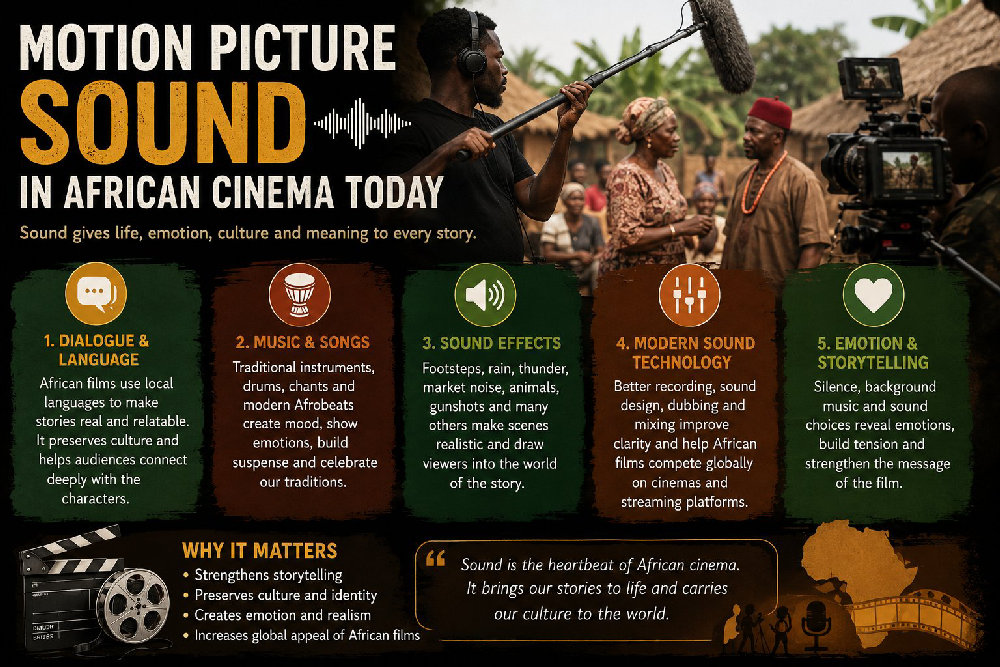
Motion Picture Sound in African Cinema Today
Imagine watching an African film where the actors move their lips but no words are heard, where the drums are silent during a traditional festival, and where the sounds of birds, rain, market women, or village life are missing. The story would feel empty and lifeless. This shows that sound is one of the most powerful elements of cinema. In African cinema today, sound does more than accompany pictures—it gives life, emotion, culture, and meaning to every scene.
African cinema reflects the traditions, languages, music, and lifestyles of different communities across the continent. Through dialogue, filmmakers communicate stories in local languages such as Yoruba, Igbo, Hausa, Swahili, Zulu, and many others, helping audiences connect with the characters and preserving cultural identity.
Music also plays a significant role in African films. Traditional drums, flutes, chants, and modern Afrobeats create mood, build suspense, celebrate joyful moments, and express emotions that words alone cannot convey. A wedding scene becomes more exciting with cultural songs, while emotional music makes sad scenes more touching.
Sound effects are equally important. The sound of footsteps, thunder, flowing rivers, gunshots, market noise, animals, or village bells makes scenes feel realistic and draws viewers into the story. These sounds help audiences imagine that they are part of the environment being shown on screen.
In modern African cinema, especially Nollywood, filmmakers now pay greater attention to sound recording, sound design, dubbing, and mixing. Clear dialogue and high-quality sound improve the viewing experience and allow African films to compete with international productions on platforms such as Netflix, Amazon Prime Video, and in cinemas around the world.
Sound also helps to reveal emotions and character development. A moment of silence can show fear, grief, or tension, while a powerful musical score can inspire hope, courage, or excitement. In many African films, songs are used not only for entertainment but also to pass moral lessons, celebrate traditions, and tell stories passed down through generations.
In conclusion, sound is the heartbeat of African cinema today. It strengthens storytelling, preserves culture, creates emotion, improves realism, and increases the global appeal of African films. Without sound, African cinema would lose much of its identity, power, and emotional connection with audiences. As technology continues to improve, sound will remain one of the most essential tools for telling authentic African stories to the world.