
The Science Behind Food Fortification in Nigeria.
By Fatimah Afolabi
300 level mass communication student, UNILAG.
Food fortification is a scientific and technological public-health strategy that involves adding essential vitamins and minerals to commonly consumed foods to prevent nutrient deficiencies in a population. In Nigeria, this approach has become an important nutrition intervention supported by research evidence, industrial food technology, and government regulation (WHO; NAFDAC).
Micronutrient deficiencies, sometimes called “hidden hunger” — occur when people consume enough calories but lack key nutrients such as vitamin A, iron, iodine, and folic acid. According to global health authorities, these deficiencies can weaken immunity, reduce cognitive development, and increase the risk of disease, especially among children and pregnant women. Food scientists, therefore, developed fortification as a preventive solution that works through everyday diets.
One of the most widely recognized examples in Nigeria is iodized salt. Scientific studies established that iodine deficiency can lead to thyroid disorders and impaired brain development. Through food processing technology, controlled amounts of iodine compounds are added to salt during production using calibrated spraying and mixing systems. Because salt is consumed regularly in small amounts by most households, it serves as an effective delivery vehicle for iodine.
Another major intervention is vitamin A fortification of cooking oil, sugar, and wheat flour. During industrial processing, manufacturers use automated dosing equipment to add micronutrient premixes to food products. These premixes are developed through laboratory research to ensure nutrient stability and safety under storage and cooking conditions. Quality control laboratories then test samples using chemical analysis methods to verify that fortification levels meet required standards.
In Nigeria, food fortification is not only scientific but also regulatory. The National Agency for Food and Drug Administration and Control (NAFDAC) and the Standards Organisation of Nigeria (SON) oversee compliance and product testing. These agencies apply laboratory science, inspection technology, and regulatory monitoring to ensure that fortified foods in the market meet national nutrient specifications. Mandatory fortification policies currently cover products such as flour, edible oil, and salt.
Modern technology has further improved fortification monitoring. Rapid test kits and digital tracking systems now allow inspectors to measure nutrient levels more efficiently in production facilities and marketplaces. Data gathered from these inspections help public-health experts evaluate whether fortification programs are effectively reducing micronutrient deficiencies across regions.
Despite its advantages, fortification faces practical challenges. Small-scale producers may lack the technical equipment required for precise nutrient blending. There is also occasional public scepticism due to misunderstandings about what fortification means. Nutrition experts emphasize that fortification is different from harmful chemical adulteration. It is a controlled, research-based addition of essential nutrients for health protection.
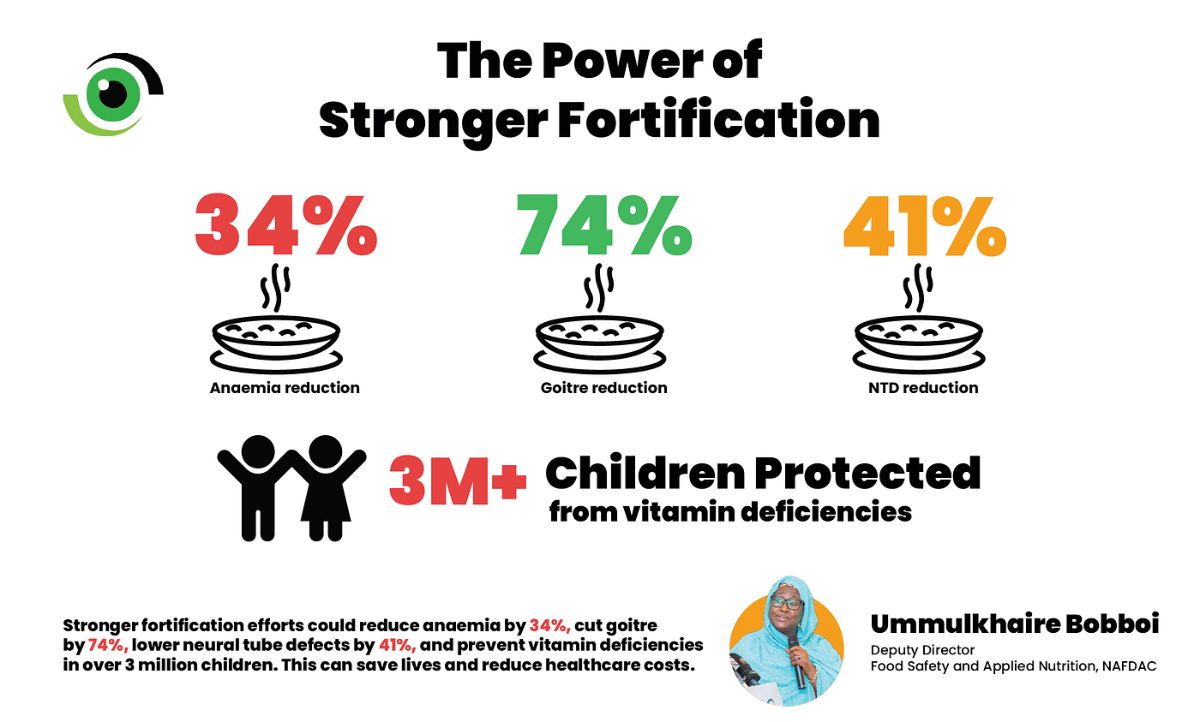
Food fortification in Nigeria demonstrates how science, laboratory research, food engineering, and regulatory technology can work together to improve national nutrition. Though often invisible to consumers, it is one of the most effective technology-driven public health measures currently in place. As monitoring systems and production technologies continue to improve, fortified foods will remain a key tool in strengthening population health.