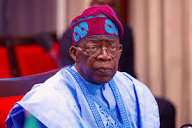
President Bola Tinubu has projected that Nigeria is on track to attract close to $20 billion in foreign direct investment in 2026, crediting the anticipated inflows to ongoing economic and regulatory reforms.
Speaking at the Africa CEO Forum in Kigali, Rwanda, Tinubu said his administration’s focus on dismantling regulatory bottlenecks, stabilising the macroeconomic environment and deepening transparency was reshaping investor perceptions of Nigeria.
Removing all the bottlenecks gives you the necessary incentives for direct foreign investment into the country he said, adding that Nigeria is already seeing commitments that could amount to nearly $20 billion in FDI in a single year.
On a presidential panel moderated by British journalist Zainab Badawi and featuring Gabonese leader Brice Clotaire Oligui Nguema, Tinubu used Nigeria’s experience to argue for a new economic model for Africa built on self-reliance, value addition and regional integration.
He insisted that the era of exporting raw materials and importing finished products must end, declaring that no one can take metal out of Nigeria without adding value. Citing the country’s deposits of rare earth minerals, he argued that African states should treat their natural resources as balance sheet assets capable of financing domestic industrialisation, including battery production and other high-value manufacturing.
Tinubu pointed to the Dangote Petroleum Refinery as an example of how government and the private sector can collaborate to close critical infrastructure gaps. He said his administration backed the 650,000-barrel-per-day facility with regulatory support, free trade incentives and access to crude, enabling it to meet most of Nigeria’s fuel needs and become a net exporter of refined products.
He also outlined a policy of supplying crude to local refineries in naira to bypass foreign exchange constraints and reduce exposure to exchange rate volatility, arguing that domestic currency settlement can strengthen local industry.
Beyond oil and minerals, Tinubu highlighted reforms in taxation, agriculture and digital infrastructure. He said Nigeria is simplifying its tax regime, digitising payments and replicating what he described as the Lagos model nationwide. In agriculture, he cited thousands of mechanised zones, government-backed price support and major road projects designed to link farms to markets.
Tinubu added that more than 90,000 kilometres of fibre optic cable have been laid across Nigeria, a backbone he said is essential for education, e-commerce and the digital inclusion of young people, whom he described as decisive to the continent’s political and economic future.