The whispers never stopped.
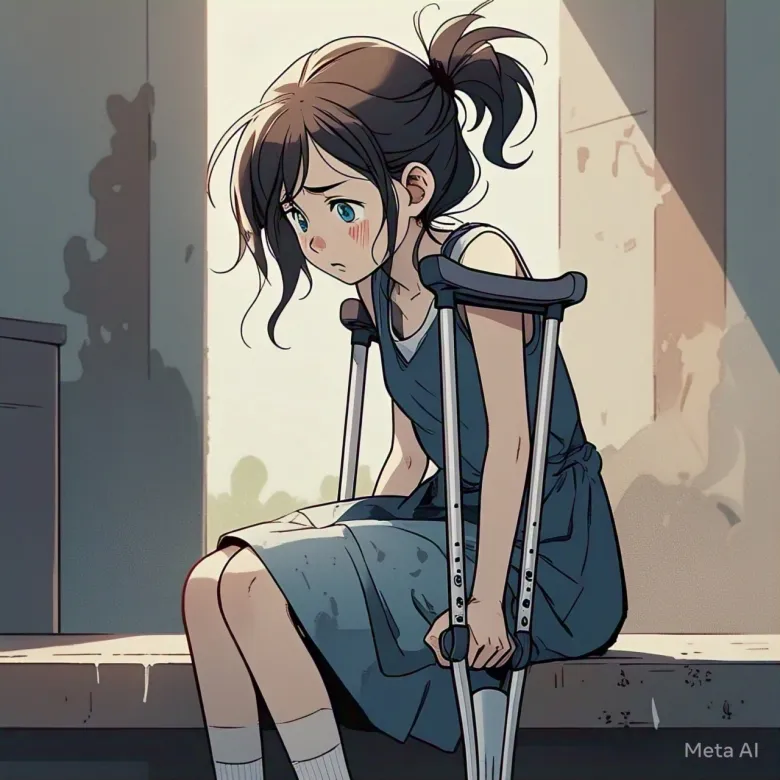
Each step I took, each movement I made, I felt their eyes on me. Judging. Mocking. Pitying.
"She walks funny."
"Poor thing. What a burden."
"Who would ever love her?"
I was born different. My legs, twisted and weak, made every step a battle. I fell more times than I could count. But the pain of hitting the ground was nothing compared to the sting of their laughter.
In school, I sat alone. Not because I wanted to, but because no one wanted to be seen with "the crippled girl." When I tried to play, they would push past me, pretending I wasn’t there. The teachers gave me pitying smiles, but they never truly saw me.
Even at home, the silence was loud. My parents loved me, but their sadness weighed heavy in the air. I saw it in my mother’s forced smiles, in my father’s long sighs. They never said it, but I could feel it—disappointment.
I started to believe what they all did. That I was less. That I would never be enough.
Then, one day, I met her. A woman in a wheelchair, smiling brighter than anyone I had ever seen.
"You think your legs define you?" she asked, her voice warm, strong. "They don’t. Your heart does."
I stared at her, confused.
"People will always have something to say," she continued. "But they don’t get to decide who you are. Only you do."
Something in me shifted that day.
I stopped hiding. I stopped walking with my head down. When they whispered, I let them. When they laughed, I kept going.
I studied harder, spoke louder, and pushed myself beyond the limits they had set for me.
Years later, I stood on a stage, diploma in hand, facing the very people who once doubted me. Their whispers had changed.
"She’s incredible."
"Look at what she’s achieved."
"She never gave up."
I smiled. Not for them, but for the girl I once was—the one who thought she would never be enough.
She was wrong.
I was never broken. I was always whole.