By Atiku Taiwo Rebecca
From Newsroom to Newsfeed
Introduction
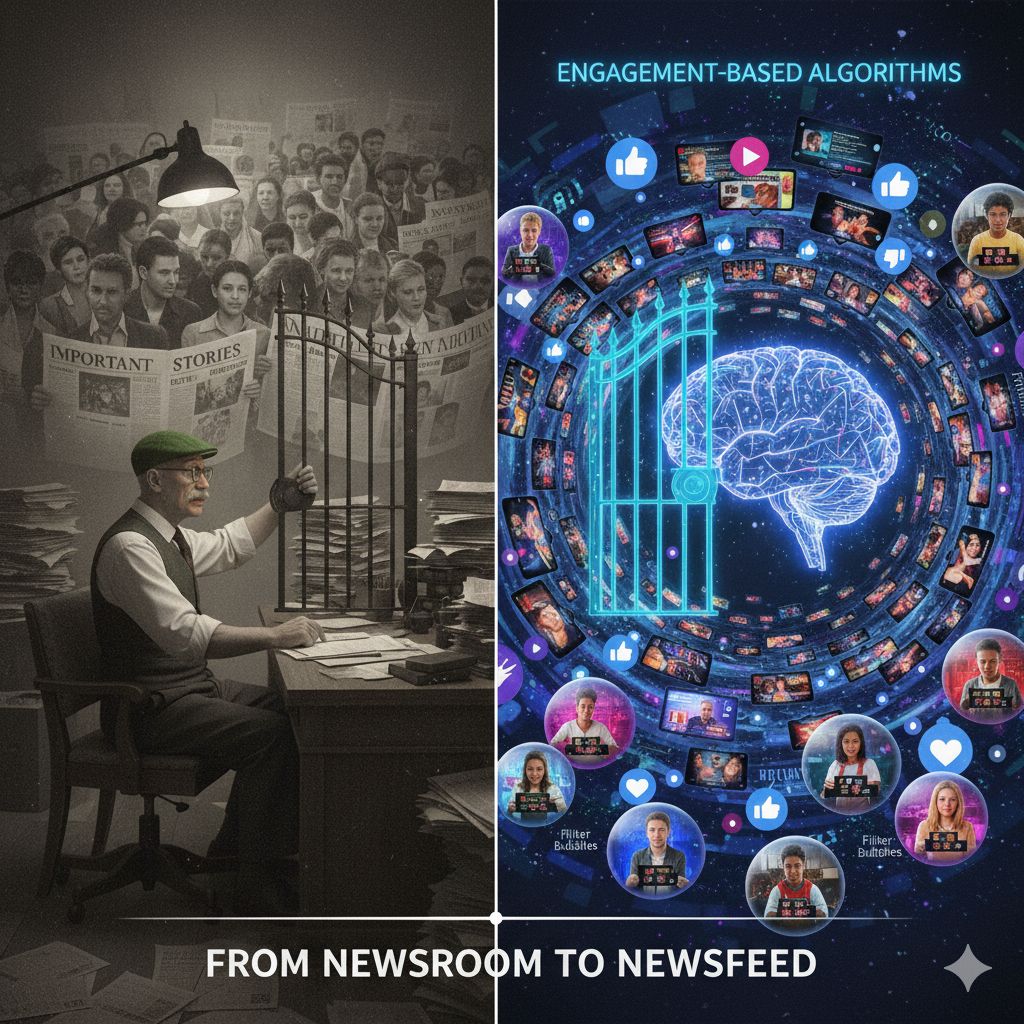
In traditional media studies, students learn about gatekeeping. This means editors and producers decide which stories are important enough to reach the public. They “open the gate” for some news and “close the gate” for others.
Today, that role is changing. Human editors still exist, but a large part of what we see online is now controlled by AI systems. Understanding this shift is very important for anyone studying or working in media today.
AI as the New Gatekeeper
Social media platforms have become the main source of news for many people. Unlike traditional newsrooms, there are not enough human editors to choose every post that appears on your screen. Instead, platforms rely on algorithms.
An algorithm is simply a set of instructions a computer follows. On social media, the main goal of these systems is engagement — keeping you scrolling, watching, and interacting.
The AI looks at your behavior:
Did you pause to read a sports post?
Did you like or share a political video?
Which topics do you click on most?
Based on these signals, the system predicts what you might want to see next and adjusts your feed accordingly.
How This Changes News
In the past, newspapers sometimes placed serious but less exciting stories on the front page because they were important for society. Today, engagement-based systems may push those stories lower because they receive fewer clicks.
Instead, more dramatic or entertaining content might appear more often because it keeps people online longer. This means that what is popular is not always the same as what is important.
Personalized Media and “Filter Bubbles”
Because AI organizes content based on individual behavior, everyone’s newsfeed becomes personalized. Two people using the same app at the same time may see completely different versions of reality.
When users mainly interact with one type of opinion or viewpoint, the algorithm tends to show more of the same. Over time, this can create a “filter bubble,” where people rarely see perspectives different from their own.
For Mass Communication students, this is a major shift. We are no longer speaking to one large audience receiving the same message. Instead, we communicate with many smaller groups, each shaped by their own personalized media environment.
A New Relationship Between Creators and Audiences
AI has also changed how media professionals understand their audience. In the past, creators relied on ratings or delayed feedback. Today, analytics provide real-time data.
Media teams can now see:
When viewers stop watching a video
Which headlines attract clicks
What formats people prefer
This data influences editorial decisions. For example, if audiences engage more with short videos than long articles, organizations may adjust their content strategy. In a way, audiences train the AI, and the AI then influences how content is created.
Conclusion
The move from human gatekeepers to algorithm-driven systems is one of the biggest changes in modern media. Algorithms help decide which stories go viral and which remain unseen.
However, AI does not understand truth, ethics, or public responsibility. It only follows data and engagement patterns. That is why human media professionals remain essential. By understanding how these systems work, we can ensure that important stories still reach audiences — even in a world filled with endless content.