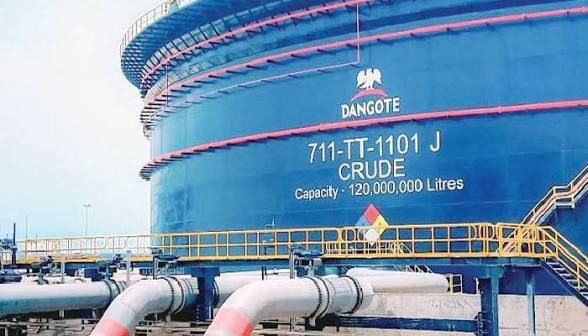
The Nigerian National Petroleum Company Limited has stepped up crude oil deliveries to the Dangote Petroleum Refinery and Petrochemicals, allocating seven cargoes for May loading in a bid to ease mounting pressure on domestic fuel supply.
Trading sources familiar with the arrangements said the new allocation represents an increase from the five monthly cargoes the refinery had been receiving, a volume that has left the 650,000-barrels-per-day facility operating well below its potential. The refinery is expected to continue receiving five cargoes through April before the higher volumes take effect.
The move comes as Nigerians grapple with record petrol prices and tight supply, despite the start-up of the giant private refinery that was billed as a game changer for the country’s energy security. Dangote officials have repeatedly warned that limited access to local crude has forced the plant to import additional barrels at international prices influenced by geopolitical tensions, particularly in the Middle East.
Industry sources say the NNPC is now leaning on its global trading network to secure third-party crude for the refinery at competitive market rates, under existing commercial agreements. A senior NNPC official, speaking on condition of anonymity, said the company remains committed to supporting domestic refining as part of its mandate to safeguard national energy security.
Even with the increase to seven cargoes, however, the refinery’s crude intake remains far short of the 13 to 15 cargoes it requires each month to run at or near full capacity. The shortfall has left the plant heavily exposed to volatile global prices and foreign exchange pressures, costs that are ultimately reflected in pump prices.
The refinery has ramped up petrol output and is now supplying just over two-thirds of Nigeria’s estimated daily demand of about 60 million litres, according to industry estimates. But recent increases in depot prices have added to inflationary pressures and public concern over the pace of relief expected from the new facility.
Analysts say diverting more crude to domestic refining could marginally reduce Nigeria’s export volumes, but argue that a stable, locally refined fuel supply would help curb import bills, support the naira, and provide a more predictable pricing environment over time.
They caution, however, that sustained crude supply at the refinery’s required volumes, alongside clear pricing and logistics frameworks, will be crucial to unlocking its full potential and delivering lasting benefits to Africa’s largest oil producer.