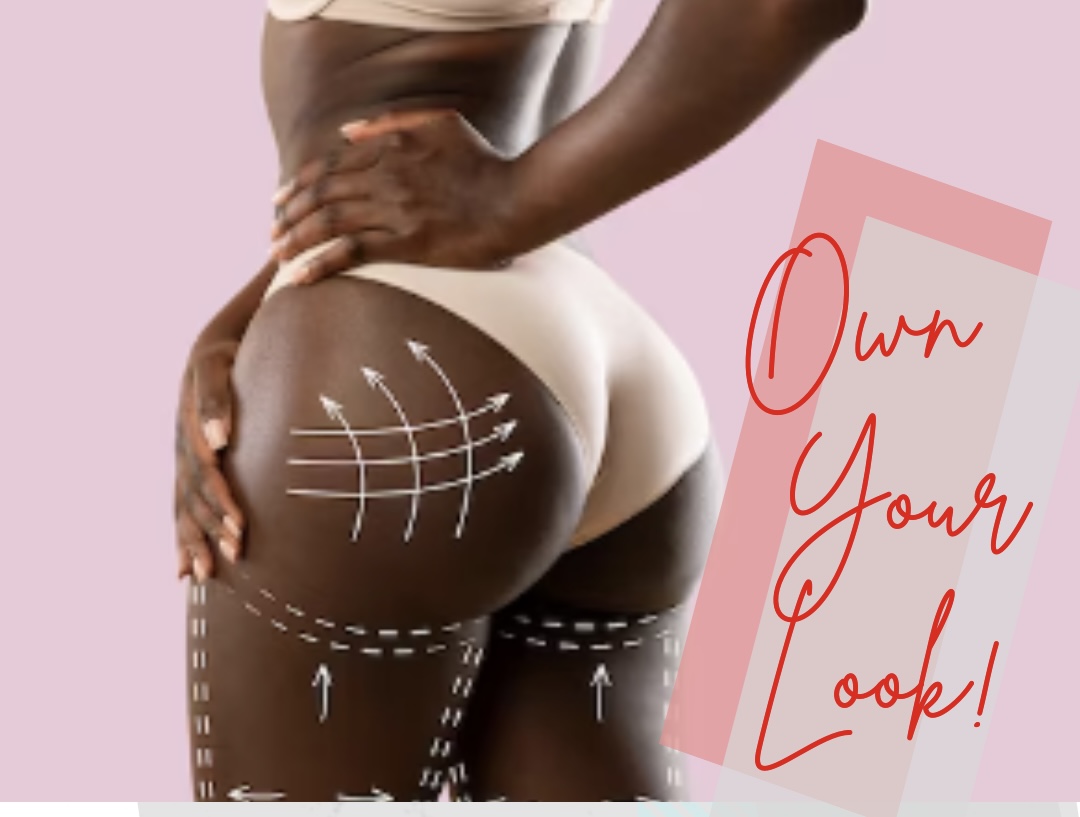
Dr. Adeyemi held the surgical tool almost like a conductor’s baton. Under the sterile sheets and the skin she’d already marked up with surgical ink, was the "raw material" of the whole process: fat. It’s a weird kind of currency for the human body. That morning, she told her medical residents that fat is actually "democratic" because everyone has it somewhere.
The Brazilian Butt Lift (BBL) is basically just a study in moving things around. What the stomach has too much of, the glutes might need. Even though the name sounds simple, the procedure is actually really complex. It isn't just about making things bigger; it’s about migration. It’s a negotiation between what a person’s body looks like now and what it could look like later.
The night before, she spent a lot of time looking at the medical imaging. She wasn't just looking at the measurements or the math, but the "architecture" of the body. She had to be careful with the branches of the gluteal artery. If she made one mistake or injected the fat too deep into the muscle instead of the subcutaneous layer, the fat could turn into an embolus. In this line of work, beauty can turn into death very quickly.
Her patient, Chioma, actually brought in pictures of old classical sculptures during her first meeting. She told the doctor, "I want to feel like marble." Dr. Adeyemi thought that was poetic, but it also worried her. After all, marble doesn't breathe or heal like a real person does.
By now, the centrifuge had finished spinning the harvested fat. It separated everything until only the "golden" cells were left. This part always fascinated the doctor, how cells taken from one part of the body could live in another. It was like the body was being convinced to accept its own tissue as a gift.
She started the injections slowly. She put small amounts into different layers of tissue, building up volume like an artist builds up shadows in a painting. If she put too much in one spot, the tissue would die. If she put too little, the body would just absorb it and the surgery would basically be a waste of time.
Her daughter, who is an anthropology student, once asked her why she does this job. Her daughter sees everything through a lens of "culture and critique." But Dr. Adeyemi didn’t really know how to explain that she doesn't judge her patients. They all have different reasons, some want to fix what pregnancy changed, and others want to fix asymmetries that nobody else even sees. She just gives them power over their own bodies, which feels like a form of mercy to her.
Finally, she put in the last stitches. In about six weeks, Chioma will see how she looks. Usually, about seventy percent of the fat survives and gets its own blood supply. The rest just disappears—it's like the body makes an "editorial decision" on what it wants to keep.
As Dr. Adeyemi took off her gloves, she knew there were three more people in the waiting room. All of them had their own visions of how they wanted to change. She thought about marble one last time. Michelangelo used to say he was just freeing the figure trapped in the stone. But humans aren't stone. They are softer and more complicated. You can reshape a body, but the body also has its own "living logic" that you have to respect. That’s where the real art is.
-Ann Folake Ayeni