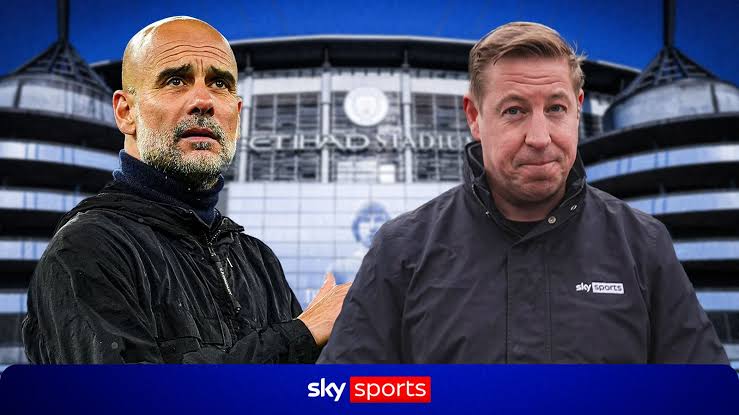
If I could ask Pep Guardiola one last question, I am still not sure what it would be. A decade of near-constant contact has not made it easier. If anything, the weight of this final pre-match press conference, the last with him as Manchester City manager, makes the choice harder.
Across ten years, the numbers are dizzying. Four press conferences a week at times, countless sit-downs, the odd hurried exchange in a tunnel or mixed zone. The questions must run into the thousands. The ones he called good, though, I can count on one hand.
Guardiola has never been shy about showing irritation. Early on, when City agreed to let us use host-broadcast access for a live interview straight after his press conference, he turned to the press officer and asked if he could simply skip it and take the fine instead. It would have cost him around £20,000, and for a moment he looked genuinely tempted.
He stayed, of course, and it became a running joke among the Manchester press pack that he could not stand me. It was never entirely true, but there were days when his stare suggested otherwise. Over time, though, something shifted. As he grew more comfortable with English football’s obsession with emotion and narrative, the edges softened.
Smiles came more easily. The jokes widened to include more of the room. The self-deprecation felt less like a tactic and more like a glimpse of the man beneath the manager. One-to-one, away from the theatre of the press room, he could be disarmingly open.
Ask about tactics and he might bristle. Ask about memory and he would light up. Mention the old Wembley and Barcelona’s first European Cup in 1992 and suddenly you were talking to the boy from Santpedor, the La Masia graduate who once dreamed of lifting a trophy rather than the coach who has made a habit of it.
His eyes still sparkle when he recalls Johan Cruyff, or the early days with Lionel Messi, or the first time he realised Phil Foden was different. In those moments, the relentless competitor gives way to the romantic who believes football can be both beautiful and ruthless.
His imprint on City is everywhere. The trophy count has more than doubled on his watch, the walls at the training ground are lined with images of title parades and cup finals, and the style of play has become a kind of club identity. The transformation from the side he inherited in 2016, let alone the one relegated a generation ago, is stark.
It is hard to picture the first press conference of next season without him in the chair, fielding questions with that familiar mix of exasperation and curiosity. After a decade of asking, there is almost nothing he has not been quizzed on. Perhaps originality is impossible now.
So maybe the final question should be the simplest. How does he really feel about us, the people who have spent ten years dissecting his every decision? Has he, in his own way, grown as fond of this strange, demanding circus as it has grown attached to him?