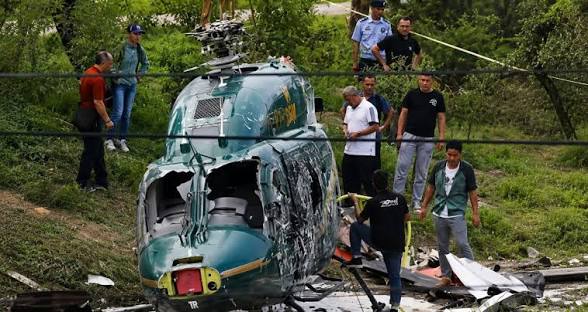
A helicopter operated by Saudi Aramco has crashed in the eastern coastal city of Ras Tanura, killing all 14 people on board, according to an official statement from Saudi authorities.
The aircraft went down near one of the kingdom’s most strategically important energy installations, a vast refining and export complex on the Gulf coast that anchors Saudi Arabia’s role as the world’s leading crude exporter. Officials said all those killed were Saudi citizens. No survivors were found at the crash site.
The Saudi energy ministry said an investigation has been launched to determine the cause of the accident. Authorities have not indicated any link to hostile activity, stressing that there is currently no evidence the crash was the result of an attack.
Aramco, the state-controlled oil giant, operates one of the largest corporate aviation fleets in the region, with more than 60 aircraft serving over 300 heliports across Saudi Arabia. Its helicopters are a critical lifeline for transporting workers, engineers and equipment to remote oil fields, offshore platforms and industrial sites scattered across the desert and along the Gulf.
The crash comes at a time of heightened tension in the Gulf, where energy infrastructure has repeatedly been drawn into wider regional conflict. Iranian attacks and the temporary closure of the Strait of Hormuz have underscored the vulnerability of oil and gas exports that pass through or originate from the area.
Ras Tanura itself is a cornerstone of Saudi Arabia’s energy network. Home to one of the largest refineries in the Middle East, with a capacity of about 550,000 barrels per day, the complex also includes export terminals and storage facilities that handle a significant share of the kingdom’s crude shipments.
In recent months, the facility and other refineries in Jubail, Yanbu and Riyadh have been targeted in drone and missile attacks linked to the broader Middle East conflict, forcing temporary shutdowns and disrupting production. Those incidents prompted Riyadh to bolster air defenses and review security protocols around key energy assets.
While the latest tragedy appears, for now, to be an aviation disaster rather than an act of sabotage, it adds to the strain on an energy sector already operating under intense geopolitical and security pressure.