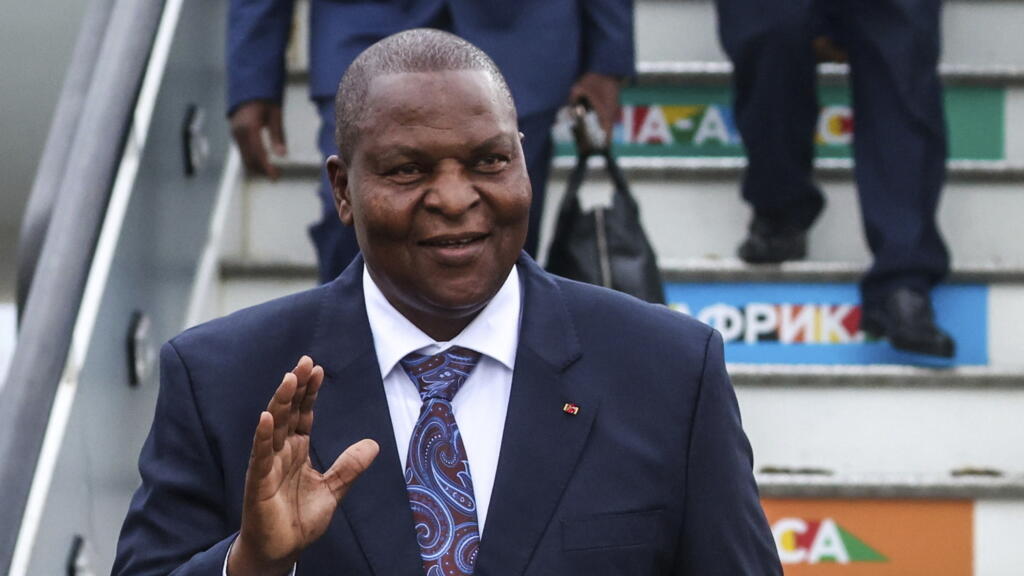
Central African Republic President Faustin-Archange Touadéra has unveiled a new government, consolidating his grip on power with a cabinet that preserves continuity while introducing a limited number of fresh faces.
The 29-member ministerial team remains largely intact from the previous administration. Only 10 newcomers have been brought into the fold, underscoring Touadéra’s preference for stability over sweeping political change. Prime Minister Félix Moloua, a close ally who has overseen key economic and reconstruction portfolios, has been reappointed to lead the government.
Touadéra’s renewed mandate follows his re-election with nearly 78 percent of the vote, according to official tallies. The result has been fiercely contested by the opposition. His main challenger, Anicet-Georges Dologuélé, has denounced the process as massive fraud, accusing the presidency of tightening its control over electoral and state institutions and limiting genuine political competition.
The formation of the new government comes against the backdrop of a fragile political landscape and persistent insecurity in parts of the country. Touadéra’s administration faces the dual challenge of asserting state authority beyond the capital, Bangui, and addressing deep social and economic grievances in a nation scarred by years of conflict.
Parliament has also begun a new term, though it remains incomplete. Of the 144 seats in the National Assembly, only 90 members have so far been sworn in. The remaining 54 seats hinge on the outcome of a second round of legislative elections, delayed after poll workers went on strike over unpaid wages. The dispute has highlighted the financial and logistical strains on the electoral system, as well as the broader governance issues confronting the state.
Analysts say the largely unchanged cabinet signals Touadéra’s intention to rely on a trusted inner circle as he navigates mounting international scrutiny, ongoing peace efforts with armed groups, and negotiations with foreign partners. Yet the limited renewal of the political class may deepen opposition claims that the current system is closing ranks rather than opening space for broader representation.
For many Central Africans, the test of the new government will lie less in its composition than in its ability to deliver security, pay public servants on time, and revive an economy still struggling to emerge from years of instability.